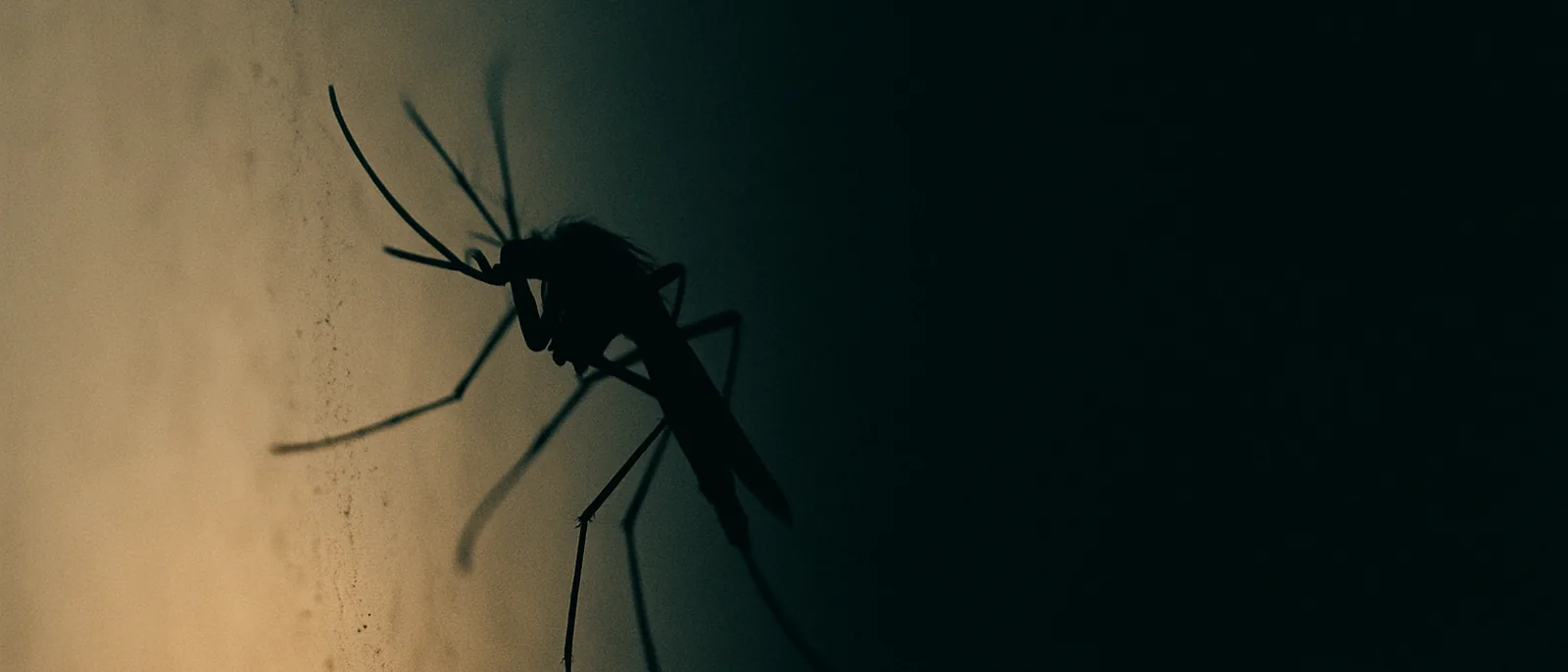
This entry examines Surah al-Baqarah 2:26 and its phrase fama fawqaha ("and what is above or beyond it"), together with a reading that ties the mosquito to organisms smaller than itself. The case rests on a disputed translation and is weak.
The source text
إِنَّ ٱللَّهَ لَا يَسْتَحْىِۦٓ أَن يَضْرِبَ مَثَلًا مَّا بَعُوضَةً فَمَا فَوْقَهَا ۚ فَأَمَّا ٱلَّذِينَ ءَامَنُوا۟ فَيَعْلَمُونَ أَنَّهُ ٱلْحَقُّ مِن رَّبِّهِمْ ۖ وَأَمَّا ٱلَّذِينَ كَفَرُوا۟ فَيَقُولُونَ مَاذَآ أَرَادَ ٱللَّهُ بِهَـٰذَا مَثَلًا ۘ يُضِلُّ بِهِۦ كَثِيرًا وَيَهْدِى بِهِۦ كَثِيرًا ۚ وَمَا يُضِلُّ بِهِۦٓ إِلَّا ٱلْفَـٰسِقِينَ
“Indeed, Allāh is not timid to present an example - that of a mosquito or what is smaller [i.e., less significant] than it. And those who have believed know that it is the truth from their Lord. But as for those who disbelieve, they say, "What did Allāh intend by this as an example?" He misleads many thereby and guides many thereby. And He misleads not except the defiantly disobedient.”
Qur'an 2:26 · Saheeh International
What was understood in the seventh century
In seventh-century usage the mosquito stood for something small and negligible, and the verse presses that God is not embarrassed to draw a lesson from even so slight a creature. Believers accept such similitudes as truth from their Lord, while others ask what God could intend by so trivial an example. Microorganisms living on or within the mosquito were entirely unknown.
The phrase fama fawqaha literally reads "and what is above it." Most classical exegetes took this to mean "greater than it" in a rhetorical sense, that God will draw similitudes from things larger as readily as from things small. The words can also be read as "beyond it" in the direction of smallness, and this less common reading is what the sign-interpretation requires.
The modern correspondence
Some modern commentators highlight the mosquito together with fama fawqaha read as "what is beyond it": the female mosquito hosts organisms and parasites smaller than itself, notably the Plasmodium parasite that causes malaria. This parasite was unseen until microscopy in the seventeenth century, and its transmission by the mosquito was demonstrated by Ronald Ross in 1897. On this reading the verse gestures toward creatures on the scale of, or below, the mosquito.
This is an interpretive extension, and a fragile one. The verse's manifest sense is a lesson about God's freedom to use small things as parables, and the parasitology is supplied roughly twelve centuries after the text through a reading of fawqaha that is not the majority one.
Considerations and counterpoints
Critics note that fawqaha most standardly means "greater" or "above it," and that the verse concerns God's freedom to use humble similitudes, not entomology. The malaria-parasite reading requires selecting the minority "beyond/smaller" sense and then supplying discoveries made long after. Saheeh International itself renders the phrase as "what is smaller than it," which shows that the translation is genuinely contested rather than settled. Defenders reply that the "beyond/smaller" sense is at least grammatically available and that the mosquito does in fact carry smaller organisms, but they concede that the classical mainstream did not read the phrase this way. Because the reading depends on a disputed rendering layered onto a parable whose manifest meaning is rhetorical, this entry is a weak candidate for a scientific sign and is presented as such.
Credibility rating: Tier 3 · Contested — The 'microorganisms beyond the mosquito' reading depends on an uncertain translation of fawqaha and on layering modern parasitology onto a parable whose classical meaning is rhetorical.