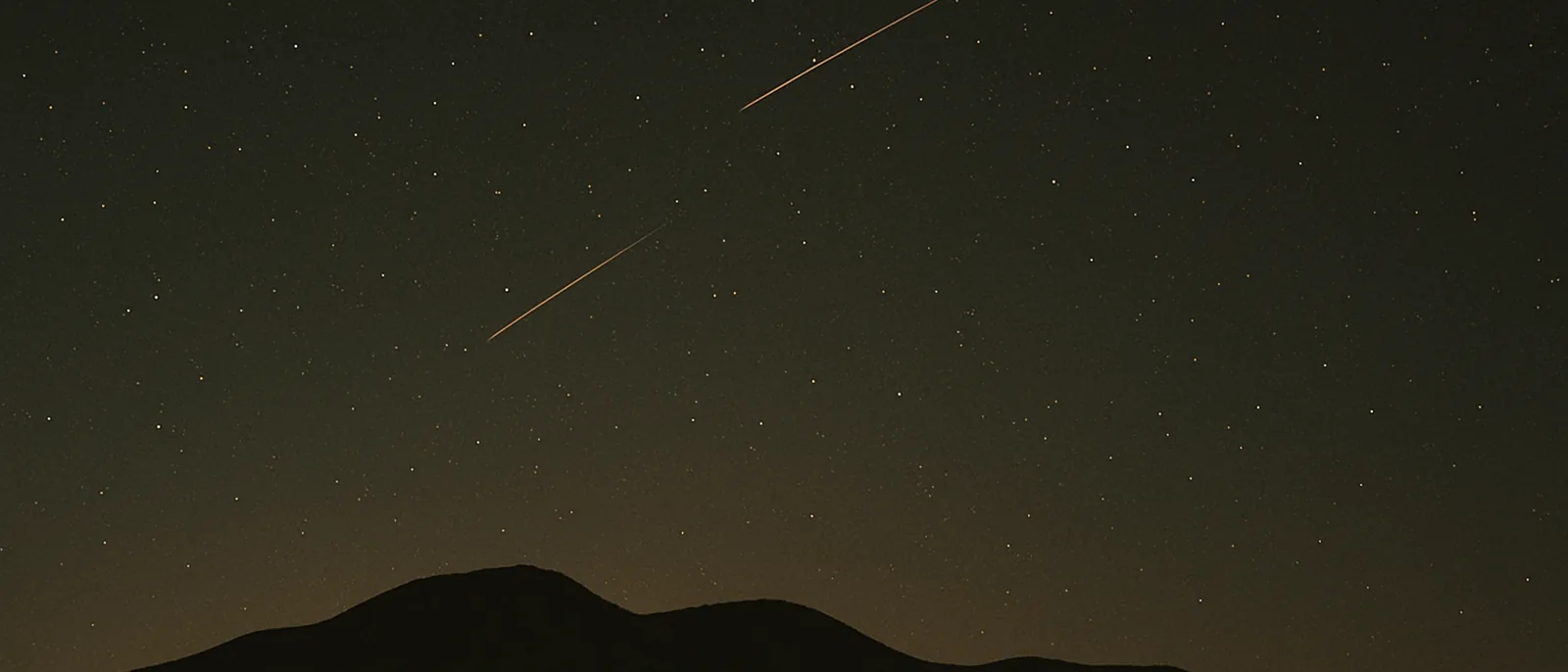
This entry examines Surahs Fussilat 41:12 and al-Mulk 67:5, which describe the nearest heaven as adorned with lamps (masabih) that also serve as missiles against devils. This is as much a flashpoint of criticism as a claimed sign, and the entry treats it that way: the apologetic case here is comparatively weak.
The source text
فَقَضَىٰهُنَّ سَبْعَ سَمَـٰوَاتٍ فِى يَوْمَيْنِ وَأَوْحَىٰ فِى كُلِّ سَمَآءٍ أَمْرَهَا ۚ وَزَيَّنَّا ٱلسَّمَآءَ ٱلدُّنْيَا بِمَصَـٰبِيحَ وَحِفْظًا ۚ ذَٰلِكَ تَقْدِيرُ ٱلْعَزِيزِ ٱلْعَلِيمِ
“And He completed them as seven heavens within two days and inspired [i.e., made known] in each heaven its command. And We adorned the nearest heaven with lamps [i.e., stars, for beauty] and as protection. That is the determination of the Exalted in Might, the Knowing.”
Qur'an 41:12 · Saheeh International
وَلَقَدْ زَيَّنَّا ٱلسَّمَآءَ ٱلدُّنْيَا بِمَصَـٰبِيحَ وَجَعَلْنَـٰهَا رُجُومًا لِّلشَّيَـٰطِينِ ۖ وَأَعْتَدْنَا لَهُمْ عَذَابَ ٱلسَّعِيرِ
“And We have certainly beautified the nearest heaven with lamps [i.e., stars] and have made [from] them what is thrown at the devils and have prepared for them the punishment of the Blaze.”
Qur'an 67:5 · Saheeh International
What was understood in the seventh century
Late antique learned cosmology placed the stars on the outermost celestial sphere, beyond the sun, moon, and planets; popular Semitic cosmology, by contrast, hung lamps on the near side of the firmament. Meteors — shooting stars — were widely understood across cultures as omens or as missiles against spirits. Into this setting, the Qur'an recited by the Prophet Muhammad (peace be upon him) locates the lamps in the nearest or lowest heaven (as-sama' ad-dunya) and connects them with adornment, protection, and projectiles against devils. The placement is the notable choice: where learned astronomy put the stars farthest away, these verses put the visible lamps nearest.
The modern correspondence
Modern astronomy describes stars as self-luminous spheres of plasma — genuine light sources, unlike the reflective moon — and every star visible to the naked eye lies within our own galaxy, the universe's nearest precinct relative to the deep field of other galaxies. Meteors are physically real streaks of superheated plasma produced when debris strikes the atmosphere at up to about 72 km/s, as NASA documents.
Commentators who cite these verses point to the aptness of the lamp metaphor and the localization of visible stars, and defend the projectile clause as describing meteors — noting that 67:5 distinguishes the lamps from “what is thrown.” These readings are offered in the literature; they are contested at every step.
Considerations and counterpoints
Skeptics regard 67:5 as one of the clearest cases of the Qur'an sharing its era's cosmology: stars, or objects made from them, serve as missiles hurled at eavesdropping devils, echoing shooting-star demonology attested in earlier Jewish and Arabian tradition, with 37:6–10 elaborating the same picture. Calling stars lamps adorning a near ceiling matches the firmament model rather than stellar astrophysics, and the “seven heavens in two days” frame of 41:12 resists scientific mapping. Apologetic readings that separate meteors from stars must still explain why the lamps themselves are said to be made into projectiles. Readers should weigh this entry with those objections fully in view; it is included under this site's over-inclusion policy precisely because it is cited on both sides.
Credibility rating: Tier 3 · Contested — The lamp metaphor is apt but commonplace in ancient literature, and the devils-pelting context is the standard skeptical exhibit for mythological cosmology in the Qur'an, so the item cannot honestly be rated higher.